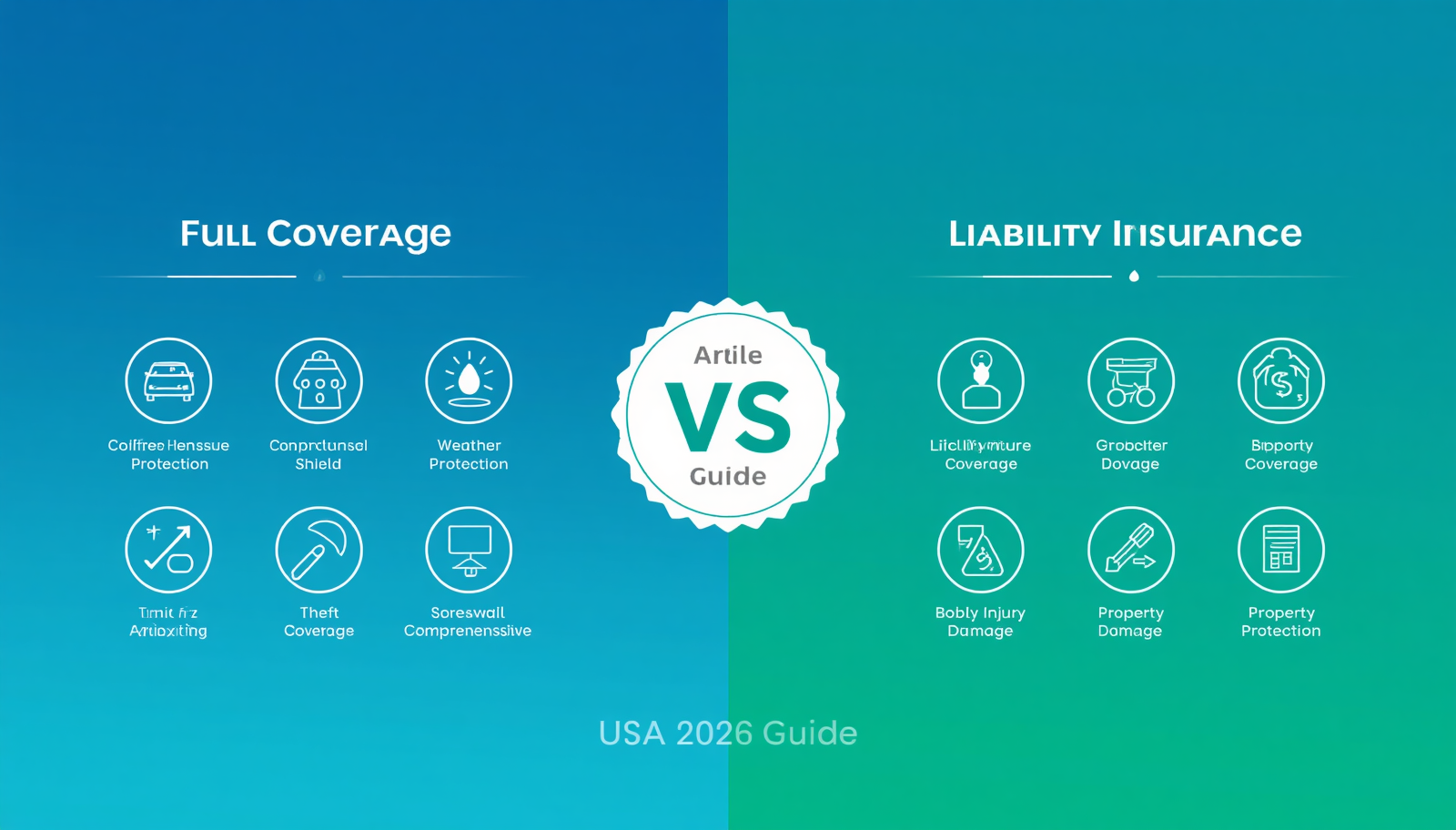
When shopping for auto insurance in the United States, one of the most common questions drivers ask is: Should I choose full coverage or liability insurance? The answer depends on your vehicle, budget, state requirements, driving history, and how much financial risk you are willing to take.
Understanding the difference between these two types of car insurance can save you money and help you avoid serious out-of-pocket expenses after an accident. Many drivers choose the cheapest option without knowing what it covers. Others overpay for coverage they may not need.
This complete guide explains full coverage vs liability insurance, what each includes, how much they cost, who should choose each option, and how to make the best decision in 2026.
What Is Liability Insurance?
Liability insurance is the minimum legal coverage required in most U.S. states. It helps pay for damages or injuries you cause to others when you are at fault in an accident.
Liability insurance generally includes two main parts:
1. Bodily Injury Liability
This pays for:
- Medical expenses for injured people
- Lost wages
- Pain and suffering claims
- Legal fees if you are sued
2. Property Damage Liability
This pays for:
- Damage to another person’s car
- Damage to fences, buildings, poles, mailboxes, or structures
- Repair or replacement costs
Example:
If you rear-end another driver and cause $18,000 in damage plus $12,000 in medical bills, your liability insurance may cover those costs up to your policy limits.
Important Note:
Liability insurance does not cover your own vehicle repairs if you caused the accident.
What Is Full Coverage Insurance?
Full coverage insurance is not an official insurance term, but it usually means a policy that includes:
- Liability coverage
- Collision coverage
- Comprehensive coverage
Sometimes drivers also add:
- Uninsured motorist coverage
- Medical payments
- Personal injury protection
- Roadside assistance
- Rental reimbursement
Collision Coverage
Pays to repair or replace your own vehicle after:
- Crashing into another car
- Hitting a pole
- Single-car accidents
- Rollovers
Comprehensive Coverage
Pays for non-collision damage such as:
- Theft
- Fire
- Flood
- Hail
- Falling objects
- Animal collisions
- Vandalism
Example:
If your parked car is stolen or damaged in a storm, full coverage may help pay for repairs or replacement.
Full Coverage vs Liability Insurance: Quick Comparison
| Feature | Liability Insurance | Full Coverage Insurance |
|---|---|---|
| Covers injuries to others | Yes | Yes |
| Covers damage to others’ property | Yes | Yes |
| Covers your own car after accident | No | Yes |
| Covers theft or weather damage | No | Yes |
| Required by law | Usually Yes | No |
| Required by lender/lease | No | Usually Yes |
| Monthly cost | Lower | Higher |
Why Liability Insurance Is Cheaper
Liability insurance costs less because it protects only other people and their property when you cause an accident. It does not pay to repair your own vehicle.
Insurance companies take less financial risk with liability-only policies, so premiums are usually lower.
This makes liability insurance attractive for:
- Older cars
- Low-value vehicles
- Drivers on tight budgets
- Cars fully paid off
Why Full Coverage Costs More
Full coverage costs more because it includes protection for your own vehicle. The insurer may need to pay thousands of dollars for repairs, theft claims, hail damage, or total losses.
Premiums depend on:
- Vehicle value
- ZIP code
- Driving record
- Age
- Credit (in some states)
- Deductible amount
- Claims history
Average Cost in the USA (2026 Estimates)
Costs vary by state and company, but average estimates:
Liability Only
- $55 to $110 per month
Full Coverage
- $140 to $290 per month
Luxury cars, sports cars, and high-risk drivers may pay more.
When Liability Insurance Makes Sense
Liability-only coverage may be smart if:
1. Your Car Has Low Value
If your vehicle is worth $2,000 to $4,000, paying high premiums for full coverage may not be cost-effective.
2. You Can Afford to Replace the Car
If you have savings and can replace your vehicle yourself, liability may be enough.
3. Your Car Is Paid Off
No lender requires extra coverage.
4. You Need Lowest Possible Premium
For budget-conscious drivers, liability can reduce monthly expenses.
When Full Coverage Makes Sense
Full coverage is usually the better choice if:
1. Your Car Is New or Expensive
Replacing or repairing newer vehicles can cost thousands.
2. You Have a Loan or Lease
Most lenders require collision and comprehensive until the loan is paid off.
3. You Live in High Theft Areas
Comprehensive can help if your vehicle is stolen.
4. Severe Weather Is Common
Floods, hail, storms, and falling trees can damage vehicles.
5. You Depend on Your Car Daily
If losing the car would create hardship, full coverage offers stronger protection.
State Minimum Liability Limits Explained
States require minimum liability amounts, often shown like this:
25/50/25
This means:
- $25,000 bodily injury per person
- $50,000 bodily injury per accident
- $25,000 property damage
However, minimum limits may not be enough in serious accidents.
Why State Minimum Coverage Can Be Risky
Medical bills and vehicle repair costs have risen sharply. A single accident can exceed state minimums.
If damages go beyond your policy limit, you may be personally responsible for the rest.
Example:
- Damage total = $60,000
- Property damage limit = $25,000
- You may owe $35,000
That is why many experts recommend higher liability limits.
Best Liability Limits for Better Protection
A common recommendation:
100/300/100
Meaning:
- $100,000 injury per person
- $300,000 injury per accident
- $100,000 property damage
This gives stronger financial protection and may not cost much more than minimum coverage.
Deductibles Explained
A deductible is what you pay before insurance covers the rest of a claim.
Example:
- Repair bill = $3,000
- Deductible = $500
- Insurance may pay $2,500
Higher deductibles often lower monthly premiums.
Collision and comprehensive usually include deductibles. Liability generally does not.
Full Coverage vs Liability for Financed Cars
If your car has an auto loan:
Most lenders require:
- Collision
- Comprehensive
- Sometimes gap insurance
Why?
Because the lender wants to protect the vehicle until the loan is paid.
Dropping full coverage without lender approval may violate your loan agreement.
Full Coverage vs Liability for Older Cars
For older vehicles, ask:
- What is the current market value?
- How much is full coverage costing yearly?
- Could I replace the car myself?
If your car is worth $3,000 and full coverage costs $1,800 yearly, liability may be more practical.
Does Full Coverage Cover Everything?
No. Even full coverage has limits and exclusions.
It may not cover:
- Routine maintenance
- Engine failure from wear and tear
- Intentional damage
- Racing
- Commercial use without proper policy
- Personal items stolen from car (sometimes homeowners/renters policy applies)
Always review policy details.
What About Uninsured Drivers?
Some states have many uninsured or underinsured motorists.
You may want:
- Uninsured motorist bodily injury
- Underinsured motorist coverage
- Uninsured property damage (where available)
This can help if another driver has no insurance.
How to Save Money on Full Coverage
If you need full coverage but want lower rates:
1. Raise Deductible
Moving from $250 to $1,000 may reduce premiums.
2. Compare Quotes
Different insurers price risk differently.
3. Bundle Policies
Home + auto often gives discounts.
4. Keep Clean Driving Record
Tickets and accidents increase rates.
5. Ask for Discounts
Possible discounts:
- Safe driver
- Good student
- Multi-car
- Low mileage
- Defensive driving
- Auto-pay
How to Choose Between Full Coverage and Liability
Use this simple checklist:
Choose Liability If:
- Car value is low
- Car is paid off
- You can replace it yourself
- You need cheapest legal option
Choose Full Coverage If:
- Car is valuable
- Financed or leased
- Theft/weather risk exists
- Repairs would hurt financially
Example Scenarios
Scenario 1: College Student With 2008 Sedan
Car value: $2,500
Budget: Tight
Recommendation: Liability may make sense.
Scenario 2: Family With 2024 SUV
Car value: $32,000
Loan balance: $24,000
Recommendation: Full coverage strongly recommended.
Scenario 3: Remote Worker With Paid-Off 2016 Car
Car value: $8,000
Low mileage
Recommendation: Compare both options. Full coverage may still be worth it.
Common Myths
Myth 1: Full Coverage Covers Everything
False. It covers many risks, not every situation.
Myth 2: Liability Is Enough for Everyone
False. It leaves your own vehicle unprotected.
Myth 3: Cheapest Policy Is Best
False. Cheapest can become most expensive after an accident.
How to Switch Coverage
You can usually switch anytime by contacting your insurer.
Steps:
- Get quotes first
- Compare coverage limits
- Confirm lender requirements
- Start new policy before canceling old one
- Update ID cards
Never allow a lapse in coverage.
Best Companies for Full Coverage and Liability in USA
Popular insurers many drivers compare:
- State Farm
- GEICO
- Progressive
- Allstate
- USAA (eligible members)
- Nationwide
- Farmers
Rates vary by person, so compare multiple quotes.
Full Coverage vs Liability: Final Verdict
There is no one-size-fits-all answer.
Liability Insurance Is Best For:
- Older low-value cars
- Drivers needing lower monthly costs
- Owners who can replace the vehicle themselves
Full Coverage Is Best For:
- Newer or financed vehicles
- Drivers wanting stronger protection
- Areas with theft, storms, or expensive repairs
If losing your car would create financial stress, full coverage is often worth the extra cost.
If your car is old and worth little, liability may be the smarter financial move.
Frequently Asked Questions
Is full coverage required by law?
No. States usually require liability, not full coverage.
Can I drop full coverage after paying off my loan?
Yes, in most cases, once lender requirements end.
Is liability enough for a $10,000 car?
Depends on your budget and risk tolerance.
Does full coverage include rental cars?
Usually only if rental reimbursement is added.
What is cheaper: full coverage or liability?
Liability insurance is almost always cheaper.
Conclusion
Choosing between full coverage vs liability insurance comes down to balancing cost versus protection. Liability helps you meet legal requirements and keeps premiums lower. Full coverage protects your own car and reduces major financial risk after accidents, theft, storms, and more.
Before deciding, calculate your car’s value, monthly budget, local risks, and ability to pay for repairs yourself. Compare multiple quotes and review limits carefully.
The right policy is not always the cheapest one—it is the one that protects your finances when life goes wrong.